Mastering The Exposure Triangle: Tips for Better Photography
The exposure triangle: ISO, Aperture, and Shutter Speed are the most important camera settings you need to know if you want to take stunning pictures, whether they are landscapes, portraits, or videos. These three are collectively referred to as the Exposure Triangle. They regulate the way light enters your camera and the final appearance of your picture. Photographers call it an extra edge for that perfectly captured image.
ISO – Sensitivity to Light
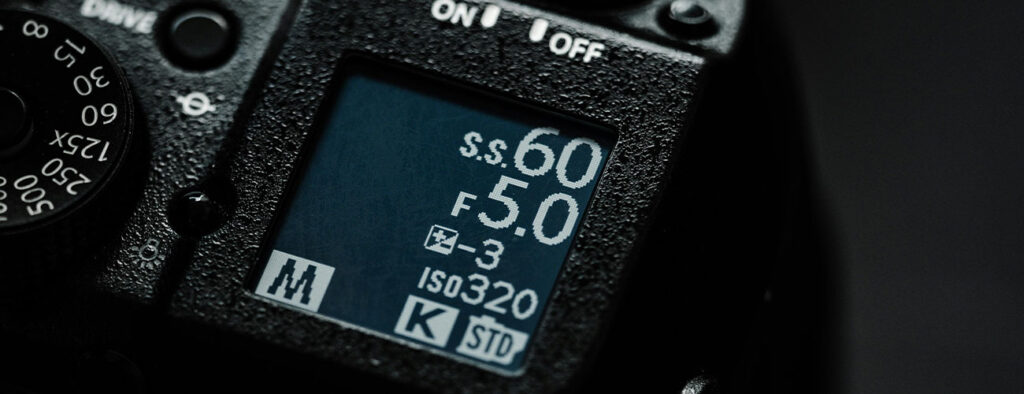
What it does: ISO regulates the camera’s sensor’s sensitivity to light.
Less light sensitivity at low ISO (100–400). Ideal for bright environments, such as the daytime outdoors.
Result: Images that are clear, sharp, and noise-free.
A higher ISO (800–3200 or higher) indicates greater light sensitivity. Excellent in dimly lit environments, such as indoors or at night.
Result: The outcome is a brighter image, but it may also become noisy or grainy.
For instance: Taking a noontime picture at the beach? Employ ISO 100.
Are you shooting at a candlelit dinner or a concert? In such low-light conditions, you might need to set your ISO to 1600 or higher.
Pro Tip: Set your ISO to the lowest setting appropriate for the light conditions. This maintains the quality of your images.
Aperture – Depth of Field
What it does:The aperture refers to the size of the hole in the lens that allows light to enter. F-stops such as f/1.8, f/2.8, f/5.6, and so on are used to measure it.
- More light enters through a wide aperture (low f-number, such as f/1.8). The background gets hazy.
- Excellent for portraits where you want the subject to be the focal point. Less light enters through a narrow aperture (high f-number, such as f/11). There is more of the scene in focus.
- Ideal for group photos or landscapes where you want everything to be crisp.
Example: On the other hand, when capturing expansive scenes like a city skyline or mountain ranges, it’s advisable to use a narrower aperture, such as f/11 or f/16, to ensure sharpness throughout the image.
Pro Tip: To isolate a subject, use f/1.8–f/2.8. If you want sharpness throughout the frame, use f/8–f/11.
Shutter Speed – Motion Control
What it does: Shutter speed refers to how long the camera’s shutter stays open to allow light in. Seconds or fractions of a second, such as 1/500, 1/60, 2s, etc., are used to measure it.
A fast shutter speed (1/500s or more) freezes action.
Use it for fast-paced activities like sports or children’s play.
Slow Shutter Speed (1/30s or less): This captures movement as blur. Use it to create artistic motion blurs, such as water flowing or light trails.
For instance, would you like to freeze a dancer in midair? Employ 1/1000s.
Do you want to demonstrate a waterfall’s motion? Use a tripod and try 1 second.
Pro Tip: Use a tripod for slow shutter speeds to avoid camera shake.
Collectively, these three settings(ISO, Aperture, and Shutter Speed) not only determine the ideal exposure, dictating how bright or dark your picture appears, but also establish the artistic style of your shot.
You’re outside taking a friend’s portrait:
ISO 100 (due to the sunshine)
f/2.0 aperture (for hazy background)
To freeze motion, set the shutter speed to 1/500s.
You’re inside a party;
ISO 1600 (to make the dark areas brighter)
f/2.8 aperture (to let in more light)
Hold your camera steady and set the shutter speed to 1/60s
CONCLUSION
Gaining complete control over your photography, consequently, can be achieved by learning how to adjust the exposure triangle; ISO, aperture, and shutter speed. Whether using a DSLR, mirrorless camera, or even a high-end smartphone, it’s the first step in producing photos of professional quality. Your creativity can really blossom once you gain the confidence to balance these environments. We at Camera Rental Lagos are here to help you get your best shots by giving you the appropriate equipment and knowledgeable advice. Enquire about our carefully selected packages, which are suited to your particular requirements and style of shoot.